
Business-to-business (B2B)
B2B trading with China often starts online, but closes through documentation, contracts, and trusted processes.
This page explains FOB exports, payments, certification risks, and why your website must be accessible in China before you start.
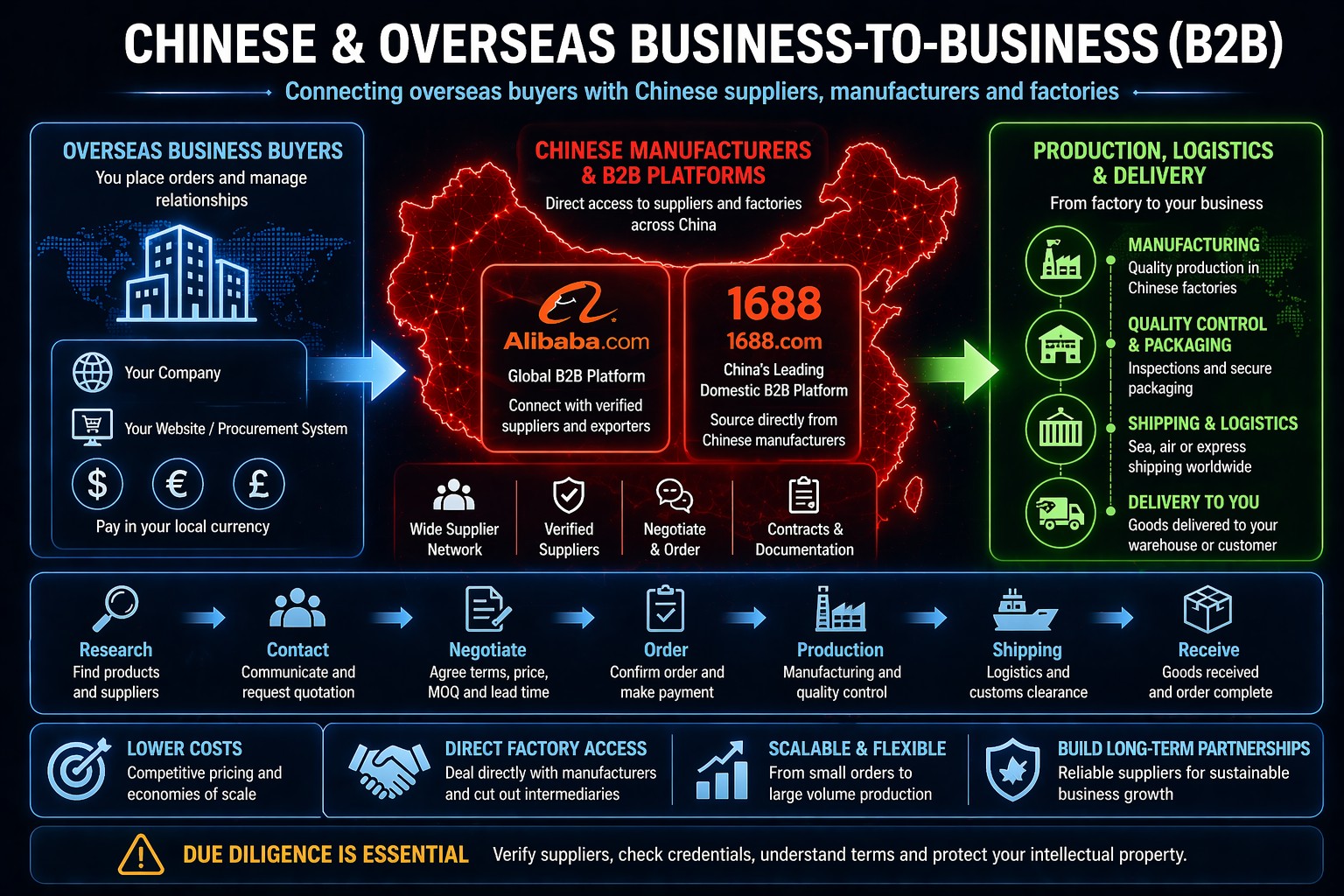
How B2B trading works in China
Face-to-face trading has been the traditional method of conducting business in China for decades. Today, the internet is essential in identifying potential suppliers — but few foreign websites are accessible in China.
Chinese businesses will always use your website as a point of reference. Ensure your site is accessible from China and kept up to date before you begin.
FOB pricing and responsibility
A common export approach is to price goods to China on an FOB (Freight on Board) basis.
Shipping costs and the management of imported goods in China are typically the responsibility of the Chinese purchaser, including import duties, insurance, local transport, and local certification if required.
Payment, escrow, and documentation
Final payment for goods is often made upon presentation of FOB certification to a bank. The bank may hold payment in escrow, wait for shipping documents, and process prearranged testing and certification papers.
Certification and licensing
Some imported goods require local product licensing for in-China resale (for example, CCC certification for power products). Beauty products may require additional compliance, including rules related to testing.
B2C cross-border sales may avoid some in-China certification requirements, but if products are resold within China (wholesale or distribution), certification becomes relevant.
Brand registration and protection
If you are exporting to China, ensure your brand is registered in China. This becomes critical if products must be tested or certified in China, because certification can be cross-referenced with brand registration for future exports.
China’s export zones and ‘export-only’ production
China’s export system is efficient partly because exporters can reclaim tax on exported goods. Historically, export manufacturing areas produced goods solely for export, and products made there were not subject to all domestic-market rules.
For example, a kettle made for the EU market can use EU power certification and may not require Chinese CCC certification if it is exported.
If you are buying goods made in China for your local market
- Check compliance with your local trading standards.
- Expect Chinese suppliers to ask for foreign certification requirements.
- Consider independent re-testing in China before goods leave China.
- Check for infringement of intellectual property rights.
Use these checks before starting B2B exports to China.
Quick checklist
Use these checks to keep trust and usability high.
- Does your website load fully in China (no blocked third‑party resources)?
- Are you pricing FOB and keeping the Chinese purchaser responsible for import duties and processes?
- Are contracts, invoices, and shipping documents aligned for bank processing/escrow?
- Do your products require China certification if resold inside China (e.g., CCC)?
- Is your trademark registered in China in your company name?
Need help?
If you’d like help improving mobile usability and China accessibility while keeping an authentic overseas brand feel, contact This email address is being protected from spambots. You need JavaScript enabled to view it.