
WHMCS V 8.10 sell service with a customer existing Subdomain
WHMCS is a website software package that sells IT services.
We use this software to support our online and hosting service in China.
https://webtest.accesstochina.com
From time to time, we find we need to add features to the WHMCS software to enable us to sell services or information not currently supported by the WHMCS " out-of-the-box” software.
The good news is that WHMCS has many development tools to support making changes as required.
Below are my notes on how to allow services to be sold with a customer's existing subdomain.
I assume you understand the WHMCS development manual, PHP, PHP templates (TPL) and WHCS hooks.
Background
When selling a service, you often add a domain name; e.g., cloud VPS service typically requires a domain/subdomain to locate the service. Example of a domain sold with a service;
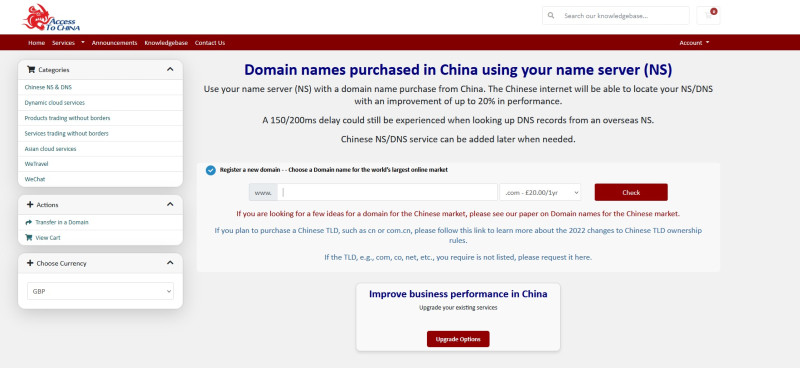
WHMCS supports the following domain sources;
-
- New domain purchased from ISP with WHMCS have many integrated suppliers
- Domain you have already purchased
- Domain transferred into your ISP domain supplier account
- Customers own domain
- Subdomain to one existing domain, e.g., customer-sub-domain.b2b66.icu (b2b66.icu is a domain own my business). It is not a subdomain owned by the customer's domain.
WHMCS currently does not support customers using their subdomain.
Changes needed WHMCS
Four files need creating/changing.
-
- Based on using WHMCS standard template:
- twenty-one -> orderform -> configureproductdomain.tpl
- javascript
- twenty-one -> orderform -> standard_cart -> js -> scripts.min.js
- Two new hooks
- ShoppingCartValidateDomain
- ShoppingCartViewCartOutput
- Based on using WHMCS standard template:
Recommended steps
Please note that these are the steps I took to make changes. I am publishing them as a guide, and they should be tested in a backup development system. Each install of WHMCS can be different based on the version and modules installed.
If you do not have development services, I recommend not installing these changes in your production system. You can request a development license key from WHMCS, create a copy of your production system, and check they work in your service environment.
1. Create a complete backup of your WHMCS system
2. Make a copy of the twenty-one orderform start_cart directory
-
- templates/orderforms/standart_cart -> templates/orderforms/standard_cart2
- In WHMCS system setting -> general settings -> ordering (tab) select new template name (in this case, standard_cart2). In doing this, you can return to the original template if needed)
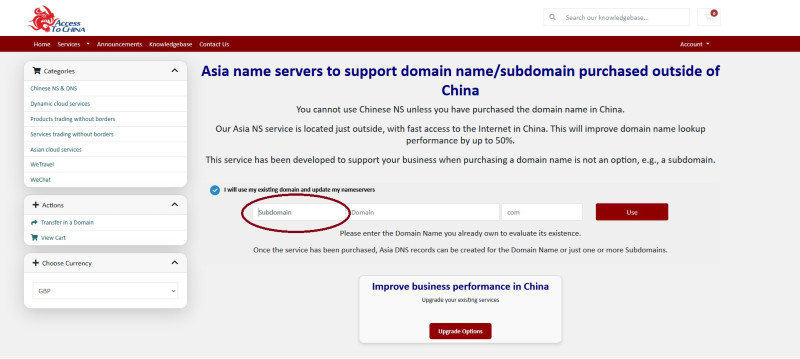
3. Create a new field in the template configureproductdomain.tpl for the subdomain;
-
- Search the template for “{if $owndomainenabled}”. This will give the section of coding needing a change.
- Add a new input field for the subdomain. Do not call the field “subdomain”. WHMCS already uses this name. I used “subd” and “owndomainsubd”;
<div>
<input type="text" id="owndomainsubd" value="{$subd}" placeholder="Subdomain" class="form-control" autocapitalize="none" data-toggle="tooltip" data-placement="top" data-trigger="manual" title="Subdomain" />
</div>
<input type="text" id="owndomainsld" value="{$sld}" placeholder="Domain" class="form-control" autocapitalize="none" data-toggle="tooltip" data-placement="top" data-trigger="manual" title="{lang key='orderForm.enterDomain'}" />
-
- Review and adjust as required and update the CSS if needed
4. Update the scripts.min.js to make the new data available to Hook
-
- We recommend that you reformat the scripts.min.js file into a readable format. I copied the JS code into the JavaScript Beautifier. There are many tools on the Internet for reformatting coding.
- In the routine, add line “subd”
jQuery(".domain-selection-options .option").removeClass("option-selected"), jQuery(this).parents(".option").addClass("option-selected"), jQuery(".domain-input-group").hide(), jQuery("#domain" + jQuery(this).val()).show()
}), jQuery("#frmProductDomain").submit(function(e) e.preventDefault();
var t = jQuery(this).find('button[type="submit"]'),
e = jQuery("#DomainSearchResults"),
n = jQuery("#spotlightTlds"),
o = jQuery("#domainSuggestions"),
f = jQuery("#btnDomainContinue"),
i = jQuery(".domain-selection-options input:checked").val(),
a = jQuery("#" + i + "sld"),
r = a.val(),
s = "",
subd = jQuery("#owndomainsubd").val(),
d = jQuery("#frmProductDomainPid").val(),
l = "",
m = jQuery("#idnLanguageSelector");
-
- Second change to the JS, again adding “subd”;
jQuery(".domain-selection-options .option").removeClass("option-selected"), jQuery(this).parents(".option").addClass("option-selected"), jQuery(".domain-input-group").hide(), jQuery("#domain" + jQuery(this).val()).show()
}), jQuery("#frmProductDomain").submit(function(e) {
e.preventDefault();
var t = jQuery(this).find('button[type="submit"]'),
e = jQuery("#DomainSearchResults"),
n = jQuery("#spotlightTlds"),
o = jQuery("#domainSuggestions"),
f = jQuery("#btnDomainContinue"),
i = jQuery(".domain-selection-options input:checked").val(),
a = jQuery("#" + i + "sld"),
r = a.val(),
s = "",
subd = jQuery("#owndomainsubd").val(),
d = jQuery("#frmProductDomainPid").val(),
l = "",
m = jQuery("#idnLanguageSelector");
-
- Save the JS file and check that the template is still functioning as before. The subdomain will not be processed until the hooks are created. It is good to check that the changes have not added new bugs to the system.
5. Create ShoppingCartValidateDomain hook
-
- Create a PHP file in /includes/hooks/ directory e.g. subdomainvalidate.php
<?php
add_hook('ShoppingCartValidateDomain', 1, function($vars) {
/// Clear session values
$_SESSION['subd'] = '';
$_SESSION['newdomain'] = '';
// logActivity('POST Data: ' . var_export($_POST, true));
/// set domain
$newdomain = isset($_POST['domain']) ? $_POST['domain'] : '';
logActivity('ShoppingCartValidateDomain - New Domain: ' . $newdomain);
$_SESSION['newdomain'] = $newdomain;
/// set subdomain
$subd = isset($_POST['subd']) ? $_POST['subd'] : '';
// logActivity('ShoppingCartValidateDomain - Subdomain: ' . $subd);
$_SESSION['subd'] = $subd;
// logActivity('Session Data: ' . print_r($_SESSION, true), 0);
});
-
- The hook is only performed when validating a domain name.
- This script collects the data from the template and creates session values for the next hook.
- The logActivity is helpful if you need to debug.
6. Create ShoppingCartViewCartOutput hook
-
- Create a PHP file in /includes/hooks/ directory e.g. viewcartoutput.php
<?php
if (isset($_SESSION['cart']['products']) && isset($_SESSION['subd']) && !empty($_SESSION['subd'])) {
foreach ($_SESSION['cart']['products'] as $key => $product) {
if (isset($product['domain']) && $product['domain'] === $_SESSION['newdomain']) {
$_SESSION['cart']['products'][$key]['domain'] = $_SESSION['subd'] . '.' . $product['domain'];
} } } });
-
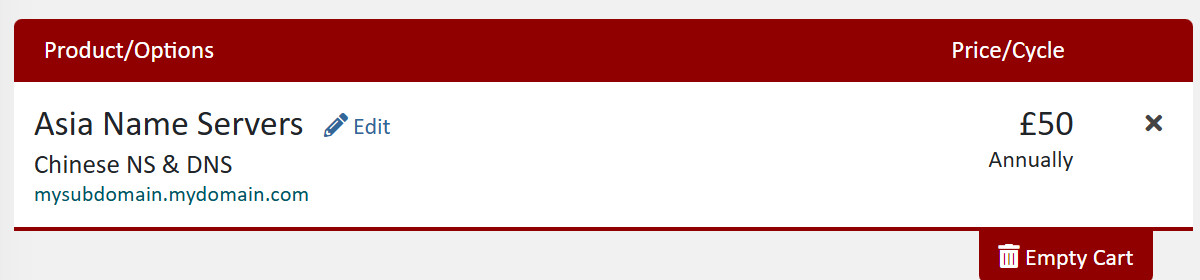
- The hook will perform each time the cart is open
- It will add the subdomain name to the correct domain name and not all domain names in the cart.
- Below is an example of the output
Last modified: Version 1.1 - 25 January 2025
- Written by Peter Heather
- Hits: 1585
Useful links for working with China
A curated list of official and practical resources for internet, business, compliance, and trading with China.
Use these links to verify requirements, understand platforms, and plan your next steps.
How to use this page
These links are grouped by common tasks. Where possible, we prioritise official sources and widely-used industry references.
If you are working on a time-sensitive issue (licensing, banking, tax, or compliance), always confirm requirements with a qualified local adviser.
China internet and ICP filing
- MIIT ICP filing system (beian.miit.gov.cn) — official ICP filing lookup / verification.
- CNNIC (China Internet Network Information Center) — domain and internet development resources.
- MIIT (Ministry of Industry and Information Technology) — policy and telecom / internet regulation.
Chinese search engines and webmaster resources
- Baidu Search Resource Platform (Baidu Webmaster)
- Shenma Webmaster
- Sogou — consumer search + input ecosystem.
Payments and e-commerce platforms
- Alipay (global)
- WeChat Pay
- Tmall (consumer marketplace)
- Taobao (consumer marketplace)
- JD.com (consumer marketplace)
- 1688 (B2B sourcing marketplace)
Chinese social media platforms
- WeChat (Weixin) — messaging, Official Accounts, Mini Programs.
- Weibo — public social media and brand visibility.
- Xiaohongshu (RED) — lifestyle, reviews, and social commerce.
- Douyin — short video and live commerce.
- Bilibili — video communities and youth culture.
Chinese e-Commerce platforms
- Tmall — brand-led B2C marketplace.
- Taobao — C2C and social commerce.
- JD.com — logistics-driven B2C platform.
- Pinduoduo — price-driven, group-buying commerce.
- 1688 — domestic B2B sourcing marketplace.
Trade bodies and organisations
- MOFCOM — Ministry of Commerce of the PRC.
- CCPIT — China Council for the Promotion of International Trade.
- China-Britain Business Council (CBBC)
- UK Department for Business & Trade
Business verification and company lookup
- National Enterprise Credit Information Publicity System (GSXT) — official company registration lookup.
- Qichacha — commercial company data (useful for cross-checking).
- Tianyancha — commercial company data (useful for cross-checking).
Shipping and customs
- UK HMRC — export/import guidance and duties.
- China Customs — policies and announcements.
- Royal Mail — small parcel shipping reference.
Helpful tools from Access to China
- 🧪 Test a web page from China — quick visibility/performance checks.
- Contact Access to China — tell us what you are trying to achieve and we’ll suggest next steps.

Quick checklist
Use these steps when you are researching or validating something in China.
- Start with official sources (MIIT, CNNIC, Customs, GSXT).
- Cross-check company registrations before sharing sensitive information.
- Check whether services you rely on are blocked/slow in China (CDNs, fonts, analytics, maps).
- Validate platform fees, deposits, and logistics rules before you commit.
- Keep screenshots and notes — you’ll need them when comparing options.
Need help?
If you’d like help with China website performance, hosting, SEO, or platform strategy, contact This email address is being protected from spambots. You need JavaScript enabled to view it.
- Written by Peter Heather
- Hits: 9958
Chinese New Year (Spring Festival)
Dates, business impact, and practical planning for overseas companies working with China.
Chinese New Year is the biggest annual shutdown period for factories, logistics, and many business teams in China.
What is Chinese New Year?
Chinese New Year (also called the Spring Festival) marks the start of the new year in the Chinese lunisolar calendar. It is a family-focused national holiday and the largest annual migration period in China.
For business, the main issue is operational disruption: factories slow down, shipping capacity tightens, and many teams take extended leave.
Chinese years
Chinese New Year day falls on a different Gregorian date each year.
| Year | Chinese New Year day | Chinese year sign |
|---|---|---|
| 2025 | 29 January 2026 | Snake |
| 2026 | 17 February 2026 | Horse |
| 2027 | 6 February 2027 | Goat |
| 2028 | 26 January 2028 | Monkey |
| 2029 | 13 February 2029 | Chicken |
| 2030 | 2 February 2030 | Dog |
| 2031 | 23 January 2031 | Pig |
| 2032 | 11 February 2032 | Rat |
| 2033 | 31 January 2033 | Horse |
| 2034 | 19 February 2034 | Tigger |
| 2035 | 08 February 2035 | Rabbit |
| 2036 | 28 January 2036 | Dragon |
Business impact: what changes
- Factories: early cut-offs for production, slower output, quality risk during ramp-down and ramp-up.
- Logistics: tighter capacity, higher rates, delays at ports and consolidation hubs.
- Office teams: decision-makers on leave, slower approvals, reduced support response times.
- Cashflow: suppliers may request earlier deposits; buyers may pause purchasing.
Planning timeline (simple model)
- 8–10 weeks before: confirm production plan, lock packaging/artwork, approve samples.
- 6–8 weeks before: book freight options, confirm warehouse space, finalise promotional plans.
- 4–6 weeks before: place final orders, confirm cut-off dates with suppliers and forwarders.
- 2–4 weeks before: expect “last shipments” and reduced responsiveness; focus on urgent priorities only.
- 2–3 weeks after: gradual restart; plan for backlog and slower ramp-up.
Opportunities: marketing and relationship building
- Send New Year greetings to suppliers and partners (respectful, short, and timely).
- Plan China-facing campaigns that match seasonal behaviour (gifting, family, travel).
- Update your customer support plan if you sell to China (expected delivery and response times).
China public holiday window
China’s official Spring Festival holiday typically covers around one week, but the real business disruption is longer due to travel and factory re-staffing.
For 2026, China’s official holiday schedule lists Spring Festival leave across mid‑February, but operational impact commonly starts earlier and ends later.
Need help planning your China timeline?
If you want help mapping a realistic schedule for procurement, website readiness, logistics, or platform launches, contact us and we’ll suggest a practical plan.

Use this checklist to avoid last-minute disruption.
Quick checklist
Use these checks to keep trust and usability high.
- Ask each supplier for their real cut-off date (production + freight).
- Build buffer time for approvals and rework.
- Move critical shipments earlier than you think you need to.
- Confirm stock levels for February–March sales and returns.
- Plan customer messaging about shipping times (especially cross-border).
- Schedule marketing assets and translations before the slowdown.
Need help?
If you want a China-ready timeline for trading, platforms, or website performance, contact This email address is being protected from spambots. You need JavaScript enabled to view it..
- Written by Peter Heather
- Hits: 20672
Access to China — Information Hub
Practical guidance for overseas businesses working with China.
Explore the article collections for being seen, being found, and starting to trade in China.
How this hub is organised
The Access to China information library is organised into three practical collections. Each collection reflects how Chinese users, platforms, and regulations actually work.
Start with reliability (being seen), move to discovery (being found), and then build the trading model and operations (start trading).
Browse the article collections
Use the tiles below to enter each collection. Each collection contains topic pages and practical checklists.
Being seen on the Chinese internet
FoundationWebsite accessibility, hosting, performance, and trust. Can Chinese users actually load your site?
Being found in China
DiscoveryChinese search engines, SEO, content structure, and how discovery works inside Chinese platforms.
Start trading in China
ExecutionBusiness models, ICP licensing, payments, shipping, B2B vs B2C, and practical risk reduction.

Most ‘China problems’ are technical and structural, not marketing-related.
Quick guidance
Use these checks to keep trust and usability high.
- Can your site load fully inside mainland China (no blocked resources)?
- Are you using third‑party services that are slow or blocked in China?
- Does your structure work inside WeChat’s in‑app browser?
- Do you understand ICP and China hosting rules for public sites?
- Have you chosen the correct trading model (B2B, B2C, e‑Mall, distributor)?
Need help?
If you’d like help improving mobile usability and China accessibility while keeping an authentic overseas brand feel, contact This email address is being protected from spambots. You need JavaScript enabled to view it.
- Written by Peter Heather
- Hits: 39929
Our customer data protection policy
How Access to China collects, uses, stores, and protects customer data.
This policy is designed for clarity and practicality, aligned with UK data protection expectations.
Summary
This policy explains what personal data we may collect, why we collect it, how we protect it, and the choices you have.
We aim to collect the minimum data needed to deliver the service you requested and to run our business securely.
Who we are
Website: accesstochina.com
Organisation: Access to China
Contact: This email address is being protected from spambots. You need JavaScript enabled to view it.
If you contact us through a form, email, or phone, you are sharing information so we can respond and (where requested) provide services.
What data we collect
- Contact data: name, company name, email address, phone number.
- Enquiry data: the content of messages you send us, attachments, and any project details you choose to share.
- Service data: information required to deliver contracted work (for example: website URLs, hosting details, DNS details, platform accounts, and technical requirements).
- Billing data: invoicing details and payment references (we do not aim to store full payment card details).
- Website usage data (limited): technical logs that help operate and secure the website (for example: IP address, user agent, pages requested, error logs).
How we use your data
- To respond to enquiries and provide requested information.
- To deliver and support services you have requested or purchased.
- To manage billing, accounts, and customer support.
- To maintain website reliability and security (fraud prevention, malware detection, troubleshooting).
- To improve our documentation and service quality (using aggregated learning, not public disclosure of your details).
Lawful basis
Depending on the context, our lawful basis may include:
- Contract: where we are providing services you have purchased.
- Legitimate interests: responding to enquiries, running our business securely, and improving services.
- Legal obligation: recordkeeping for tax/accounting where required.
- Consent: where you explicitly opt-in (for example, certain marketing communications).
Data sharing and third parties
We may share data with trusted providers only when needed to deliver services or operate securely. This can include:
- Hosting / infrastructure providers, DNS providers, and email providers.
- Payment / invoicing providers for billing administration.
- Security providers (for example, malware scanning or monitoring tools).
We do not sell customer data.
International transfers
Some technical services may process data outside the UK. Where relevant, we aim to minimise personal data in these systems and use appropriate safeguards.
If you are requesting work specifically involving China infrastructure (for example, ICP/hosting/China platforms), some project data may be handled by China-based providers as part of delivering the service.
Retention
We keep customer data only as long as necessary for the purpose it was collected for, including legal and accounting requirements.
- Enquiries: typically retained for a reasonable period to manage follow-up and continuity.
- Contracts and invoices: retained to meet accounting and legal obligations.
- Operational logs: retained for security and troubleshooting for limited periods.
Security
We use practical security controls appropriate to the type of data handled, such as access control, least-privilege administration, backups, and monitoring.
No online system can be guaranteed 100% secure; however, we take security seriously and act promptly on suspected incidents.
Your rights
Depending on your location and applicable law, you may have rights including:
- Access to the personal data we hold about you.
- Correction of inaccurate data.
- Deletion of data (where we have no ongoing lawful basis to retain it).
- Restriction or objection to certain processing.
- Data portability (in certain circumstances).
Contact and complaints
If you have a question or request about your data, contact: This email address is being protected from spambots. You need JavaScript enabled to view it.
If you are not satisfied with our response, you may have the right to raise a complaint with the relevant supervisory authority (for example, the UK Information Commissioner’s Office).
Use this checklist when sharing information for a project.
Quick checklist
Use these checks to keep trust and usability high.
- Share only what’s needed to answer your question or deliver the service.
- Avoid sending passwords by email; agree a safer method if credentials are required.
- If sharing technical access, use time-limited accounts and least privilege where possible.
- Let us know if any data is sensitive (personal IDs, bank details, private customer lists).
- If your project involves China providers, ask us to minimise personal data in transfers.
Need help?
If you have questions about this policy or how your data is handled, contact This email address is being protected from spambots. You need JavaScript enabled to view it..
- Written by Peter Heather
- Hits: 53732