Shipping to the Chinese consumer
Consumer shipping into China is possible, but predictable delivery depends on customs clearance, duties, and an end‑to‑end process.
This page summarises UK→China shipping times and explains how Chinese e‑Malls use clearing centres to manage customs and tracking.
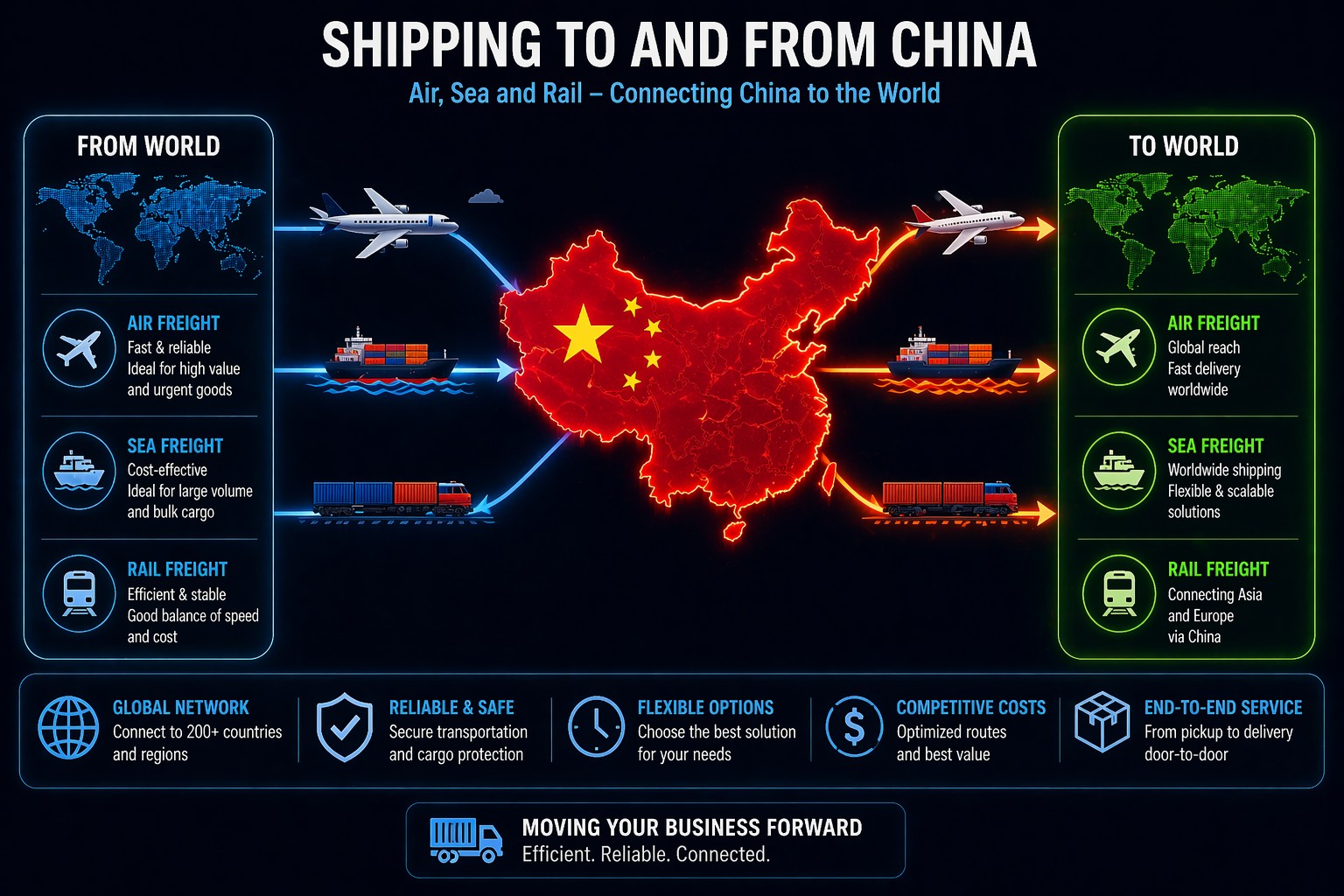
Shipping times from the UK
Typical shipping times to China (from the UK) are:
- Airmail - 5 to 7 days
- Air freight - 5 to 7 days
- Train (EU) - 3 weeks
- Sea freight EU - 5 weeks
- Shipment to Chinese consumers is by airmail/air freight.
Shipment to Chinese consumers is usually by airmail or air freight.
Shipping into China vs shipping from China
Shipping goods to China is less established than shipping goods from China. A key exception is the cross-border services offered by Chinese e‑Malls such as Tmall, Taobao, and JD.
How Chinese e‑Malls handle overseas purchases
Chinese e‑Malls often use a standard process for overseas purchases:
- Goods are ordered/purchased from overseas
- Goods are dispatched to China to a central clearing centre (e.g., Hangzhou for Taobao / Tmall)
- Goods clear customs; duties and local taxes are paid
- Goods are dispatched to the consumer in China
- If goods are returned, they go back to the clearing centre; forwarding depends on the seller’s instructions
Once goods arrive at the clearing centre in China, the consumer can track the shipment process in the e‑Mall mobile apps.
Typical delivery time shown on e‑Mall sites for international goods is around 15 days.
Central clearing centres and customs pre‑registration
Clearing centres are often located in specific zones within major cities. In these zones, Chinese Customs can offer fast clearance for imported goods by pre‑registering products with Customs.
Customs may issue clearance labels for each product line, allowing packages to be scanned and imports recorded against a customs account. This enables Customs to track imports and collect duties and local taxes efficiently.
Pricing, duties, and customer expectations
Anyone can send a package to a Chinese consumer from outside China, and Chinese consumers often purchase goods from overseas websites.
However, postage, customs clearance, and fees can arise. These are typically paid directly by Chinese consumers.
Many products on Chinese e‑Malls are sold at a net price to consumers. Because the process is structured, calculating suppliers’ net costs can be straightforward.
Recommendations
Talk to your local shipping / postal services providers. Use the e‑Mall process as your checklist.
We will update this webpage as new shipping services become available.
We also recommend you avoid storing stock overseas in China. If goods do not sell, you must arrange return shipments which can cause damage, delays, and extra cost.
Use these checks before shipping to Chinese consumers.
Quick checklist
Use these checks to keep trust and usability high.
- Have you decided whether you’ll ship individual parcels or use an e‑Mall clearing-centre route?
- Have you clarified who pays duties/taxes (you or the customer) and how it’s communicated?
- Do you have reliable tracking that works on mobile (and ideally inside China)?
- Have you planned returns: where do they go and who pays for return shipping?
- Have you compared air vs rail vs sea for cost vs urgency (even if you’ll ship by air)?
Need help?
If you’d like help improving mobile usability and China accessibility while keeping an authentic overseas brand feel, contact This email address is being protected from spambots. You need JavaScript enabled to view it.